Mick Dalla-Vee's Blog
The Real Frank Zappa: A Book That Changed How I Saw the Man
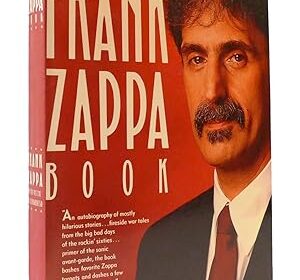
I’ll start with a confession.
I’ve never been what you’d call a hardcore Frank Zappa fan.
I’ve always respected him. I knew the reputation: musical genius, provocateur, fearless satirist. But his music can be dense, strange, and sometimes deliberately abrasive. For a lot of listeners, it’s not exactly easy entry.
Then I read The Real Frank Zappa Book, the autobiography Zappa wrote with Peter Occhiogrosso in 1989. And I can honestly say it’s one of the most enjoyable music books I’ve ever read.
Not because it tries to mythologize him. Quite the opposite.
It tears the myth apart.
Zappa in His Own Words
The book is essentially Zappa telling his own story, how he became the person the world thought of as “weird.” In typical Zappa fashion, he opens by mocking the idea that he ever tried to be strange at all. According to him, it was the rest of the world that labelled him that way.
What follows is a mix of autobiography, cultural commentary, and hilarious road stories.
Zappa talks about:
- Growing up in a slightly chaotic immigrant family
- His early obsession with science, chemicals, and blowing things up
- Discovering avant-garde composers like Edgard Varèse
- The formation of his band The Mothers of Invention
- Life on the road in the wild 1960s music scene
- The music business and its endless absurdities
The tone is sharp, funny, and brutally honest. Zappa had no patience for hypocrisy, bureaucracy, or stupidity, and the book is full of his takedowns of all three.
The Myth vs. The Reality
One of the most interesting things about the book is how much time Zappa spends correcting the public myths about him.
For decades people believed outrageous stories, everything from bizarre stage antics to grotesque rumours. Zappa calmly dismantles them with his trademark sarcasm, showing how ridiculous rock mythology can become.
You start to see a pattern: the public saw chaos, but Zappa himself was intensely disciplined.
Behind the wild image was a meticulous composer who worked constantly. He ran his bands like a military unit and treated music as serious craft.
That contrast, between the anarchic image and the structured mind, is one of the most fascinating parts of the book.
The Musician Behind the Madness
Zappa explains his musical philosophy in plain language.
To him, rock music wasn’t just entertainment. It was a platform for experimentation. His records blended rock, jazz, classical composition, satire, and social commentary.
He also believed strongly in artistic independence. Throughout his career he fought record labels, censorship boards, and politicians who tried to control what musicians could say or release.
One of the book’s most memorable sections describes his battle against music censorship in the 1980s, when he testified before the U.S. Senate against attempts to regulate lyrics.
For Zappa, freedom of expression wasn’t just an abstract principle. It was essential to creativity.
The Unexpected Side of Zappa
What surprised me most was how practical and grounded he was.
Zappa was not the stereotypical rock star. He didn’t drink. He didn’t take drugs. He treated music like a job and expected the same discipline from everyone around him.
In many ways he was closer to a classical composer than a rock guitarist.
He also had a wicked sense of humour. The book is laugh-out-loud funny in places, full of bizarre stories from the road, strange encounters with record executives, and Zappa’s running commentary on American culture.
Why the Book Works
What makes The Real Frank Zappa Book so compelling is its voice.
It sounds exactly like Zappa talking to you across a table.
It’s sarcastic.
It’s brutally honest.
It’s often very funny.
And whether you love his music or not, you come away with a deep respect for the mind behind it.
Final Thoughts
Reading this book changed my perception of Zappa.
Before, I mostly saw him as an eccentric musical genius operating on the fringes of rock. After reading it, I see him as something else entirely:
A serious composer disguised as a troublemaker.
Or maybe the other way around.
Either way, if you care about music, creativity, or the strange machinery of the entertainment business, this book is worth your time.
Even if, like me, you weren’t a dyed-in-the-wool Zappa fan to begin with.
You might finish it as one
